

Completion dates fall through. Chains break. New tenants move in before you have somewhere to go. For many London movers, the gap between leaving one home and settling into another is where things get genuinely stressful. Self-storage can be the difference between a chaotic scramble and a move that holds together.
Self-storage and storage with collection are two different products at two different prices. The Self Storage Association UK represents the operators behind both and is the clearest source on how the sector is structured.
Rather not drive to a self-storage unit? Our crew loads, wraps and takes everything away on move day, then brings it back when you are ready — see door-to-door storage from £18 a week. One crew, one fixed price, no van hire.
Why So Many London Moves Need a Storage Buffer
London property chains are longer and more complicated than anywhere else in the UK. When one sale falls through, it ripples down the whole chain. A short-term storage arrangement lets you vacate on time, even if your completion date shifts by a week or two.
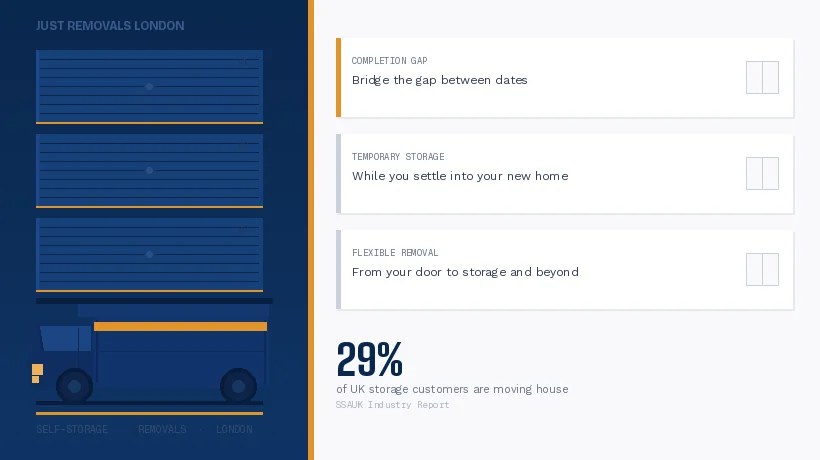
According to the Self Storage Association UK (SSAUK), 29% of all self-storage customers in the UK are in the middle of a house move. That's nearly one in three. It's not a niche need. It's a normal part of moving in this city.
These are the situations where storage comes up most often. Completion date misalignment, where your buyers want you out on the 15th but you can't complete on your new place until the 19th. Chain complications, where someone higher up the chain withdraws and pushes your move date back by days or weeks. Temporary accommodation, where you're renting a furnished room and there's no space for a houseful of furniture. Downsizing, where you're moving somewhere smaller and need time to sort what stays and what goes.
Storage doesn't mean something has gone wrong. For plenty of London moves, it's planned in from the start.
What to Put in Storage (and What to Keep With You)
Think of it this way: storage holds everything you won't need day to day while your move is in progress.
Good candidates include bulky furniture you can't fit into temporary accommodation (sofas, wardrobes, dining tables), boxes of books and kitchenware packed in advance, seasonal items like garden furniture and ski gear, and artwork or mirrors you want properly wrapped and kept out of the way.
Keep with you anything you'll need straight away: passports and utility bills, laptops and valuables, enough clothes and toiletries for the days ahead, and whatever you'll need at the new property on day one. If you're using a professional packing service, your team can separate items headed for storage from those going to the new address. Everything arrives labelled and in the right place, with no repacking needed later.
How Long Do You Actually Need Storage For?
Most people booking storage for a house move plan for four to six weeks. The reality is often longer.
Research by WhatStorage shows that most domestic customers plan on 0 to 3 months of storage, though extensions are common when completion dates shift or when a property needs work before you can fully move in. Build a buffer into your budget from the start.
For a typical London move, here's what each timeframe looks like in practice. One to four weeks covers bridging a short gap between completion dates or absorbing a brief unexpected delay. One to three months suits moves involving temporary accommodation or renovation work needed at the new property. Three months or more fits downsizing, divorce, or waiting for a purchase to complete after you've already vacated a rental.
Book for longer than you think you'll need. Extending a storage contract is usually easy to arrange. Finding extra space at short notice in London is not.
What Does Self-Storage in London Cost?
London storage costs more than the UK average, and prices have risen over recent years.
According to research by Pickfords, a 25 sq ft unit in London (roughly the size of a large wardrobe, good for boxes and small items) costs between £80 and £120 per month. A 50 sq ft unit, which comfortably holds a one-bedroom flat's contents, runs from £150 to £220 per month. A 75 sq ft unit, enough for a two-bedroom home, costs £225 to £330 per month.
Several things affect the price. Location matters most: central and inner-London facilities charge more than those on the outskirts. Contract length makes a difference too, with shorter arrangements often costing more per week. Some facilities charge extra for 24-hour access, and most require contents insurance in place before you move in.
If storage is part of a full move, ask your removals company whether they can handle it within the same job. This cuts out a separate van journey and reduces the number of times your belongings are handled.
How to Make Storage Work With Your Removals Plan
Storage works best when it's planned from the start, not bolted on as an afterthought.
If you know your move involves a gap, tell your removals company early. A good team can pack for two destinations: some items going to the new address, others headed for storage. They'll load the van so both drop-offs happen in a single trip, which cuts costs and reduces unnecessary handling.
Our secure storage service works directly alongside our removals operation. We can collect from your home on moving day, store your belongings safely, and deliver to your new property when you're ready. Your items are covered under goods-in-transit insurance during transport, so there's nothing extra to arrange on that front.
Whether you're completing a full London house removal or finishing up a flat or apartment move with dates that don't quite line up, getting storage sorted early means one less thing to panic about when the rest of the move gets complicated.
Frequently Asked Questions About Self-Storage and Moving
Do I need separate insurance for items in self-storage?
Most self-storage facilities require contents insurance covering your stored items. Some provide their own policy; others ask you to arrange your own. Check your home insurance first, as some policies extend to items held in external storage. If not, standalone cover for self-storage is usually affordable and easy to arrange.
Can my removals company take items directly to a storage facility?
Yes. A full-service removals team can collect from your home and drop items at a storage facility on moving day, so you don't need a separate trip or a second van. Tell your movers about the storage drop-off in advance so they can plan the route and load the van in the right order.
How do I know what size unit I need?
A 25 sq ft unit suits a studio flat's worth of boxes. A 50 sq ft unit takes a one-bedroom flat's contents. A 75 sq ft unit works for a two-bedroom home. Your storage provider can walk you through their sizes when you enquire, and moving up to a larger unit is usually possible if you need more space than expected.
What happens if my move is delayed and I need storage for longer than planned?
Most self-storage contracts run month to month and can be extended without penalty if you notify the facility before your end date. Factor this into your budget from the outset. A delay of a few weeks can add a full extra month's cost at London prices, so it's better to plan for it than to be caught out.
Can I access my belongings while they're in storage?
Yes. Most facilities allow access during opening hours, and some offer 24-hour access for an additional charge. If you'll need to retrieve specific items during your move, such as work equipment or clothes for a particular occasion, check the access hours and any additional access fees when you book.
Is self-storage worth it for a gap of only a few days?
Often yes. Compare the cost of a short storage rental against paying rent or a mortgage on two properties at the same time, or the stress of completing a sale and purchase on the same day. Many facilities offer flexible short-term contracts with no minimum rental period, so even a few days' storage is a practical option.
Planning a move with a gap in the middle? Talk to the team at Just Removals London about your options. We'll help you work out what size you need, whether storage makes sense for your situation, and how to fold it into your moving plan from day one. Get in touch for a free, no-obligation quote.